Could you introduce yourself?
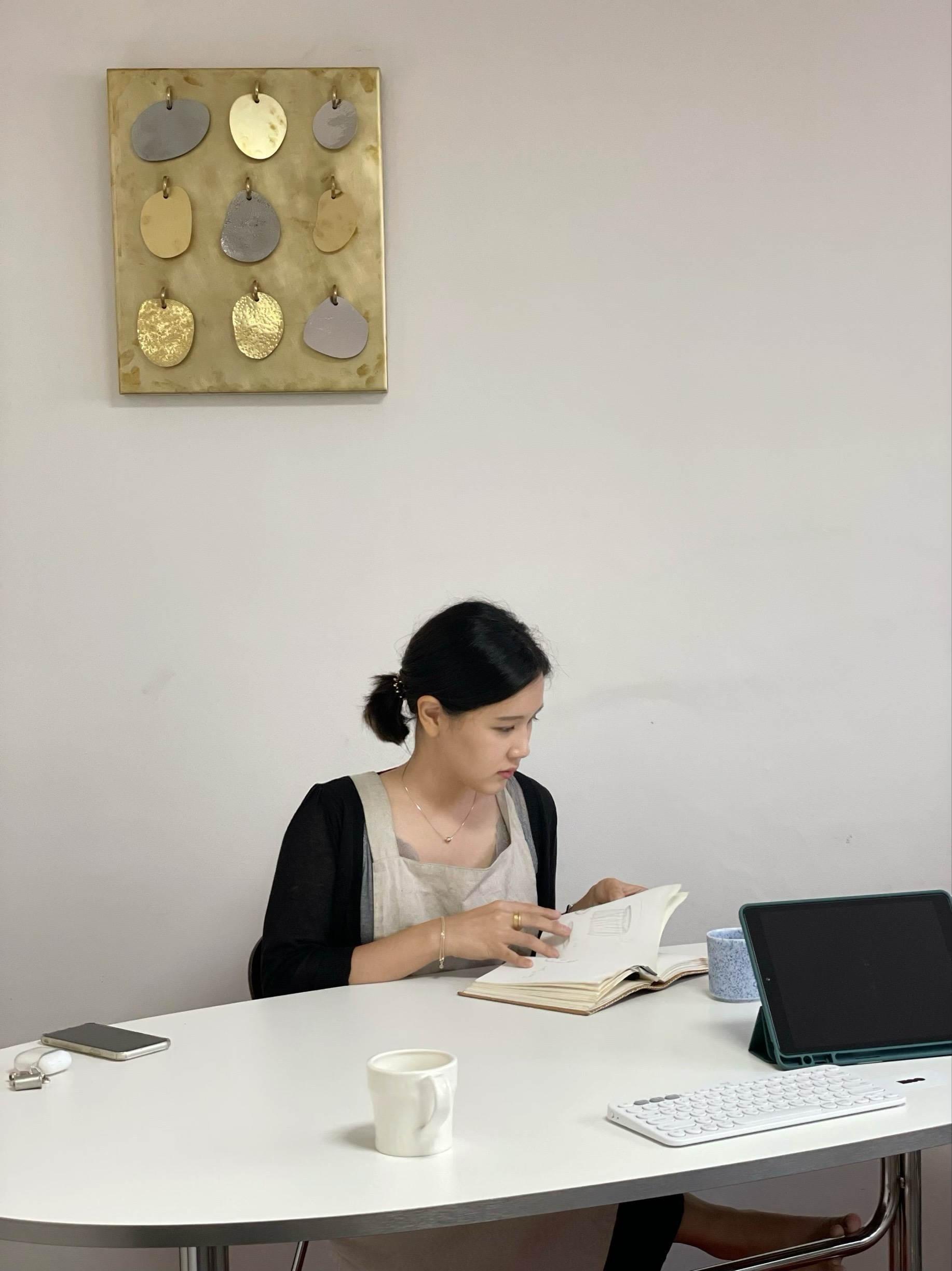
Hello, I’m Yeodong Yoon, a metal craft artist.
Did you dream of becoming a craft artist when you were young?
I studied object design in France. Before that, I attended an international high school in Gugi-dong, Seoul. When my father took a year-long sabbatical, my family and I spent about a year in France.
I loved visiting the galleries and museums there. After that year in France—which was five years ago now—I returned to Korea and started thinking about my future. I wanted to share the kinds of cultural experiences I’d had with other people, and that led me to pursue art.
How did you begin working after returning to Korea?
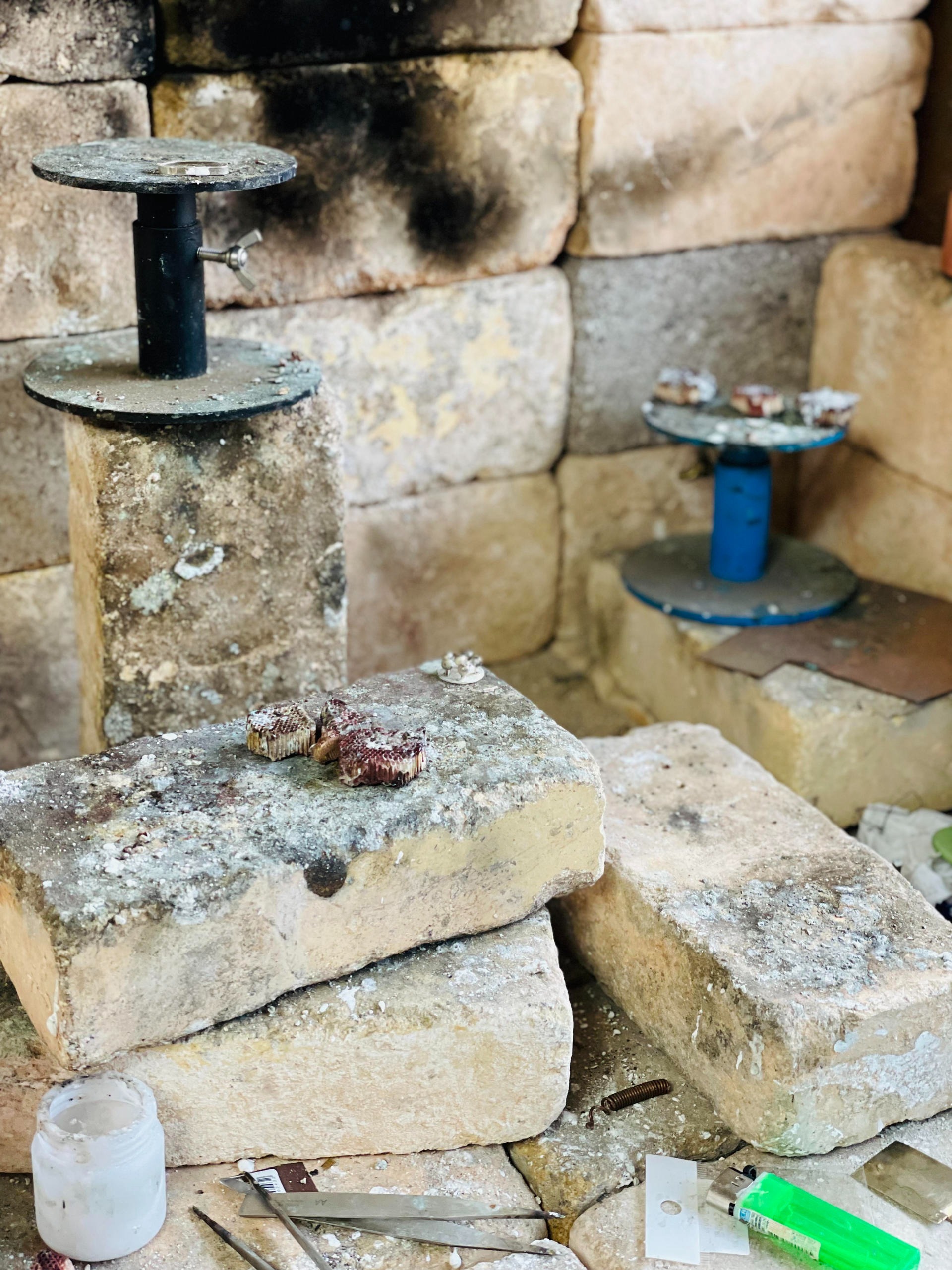
At first, I wanted to make jewelry, so I thought I should learn more about metalworking. I reached out to Ahn Seung-tae, who had completed master craftsman training in Germany, and spent a year and a half learning in his studio.
That time was all about the fundamentals. I spent three months just learning how to saw metal. Once I began feeling more comfortable making jewelry, I applied to graduate school.
So you went back to school?
Yes. Choosing to go to graduate school was the most important decision of my life. It was also what led me to commit to working professionally with metal.
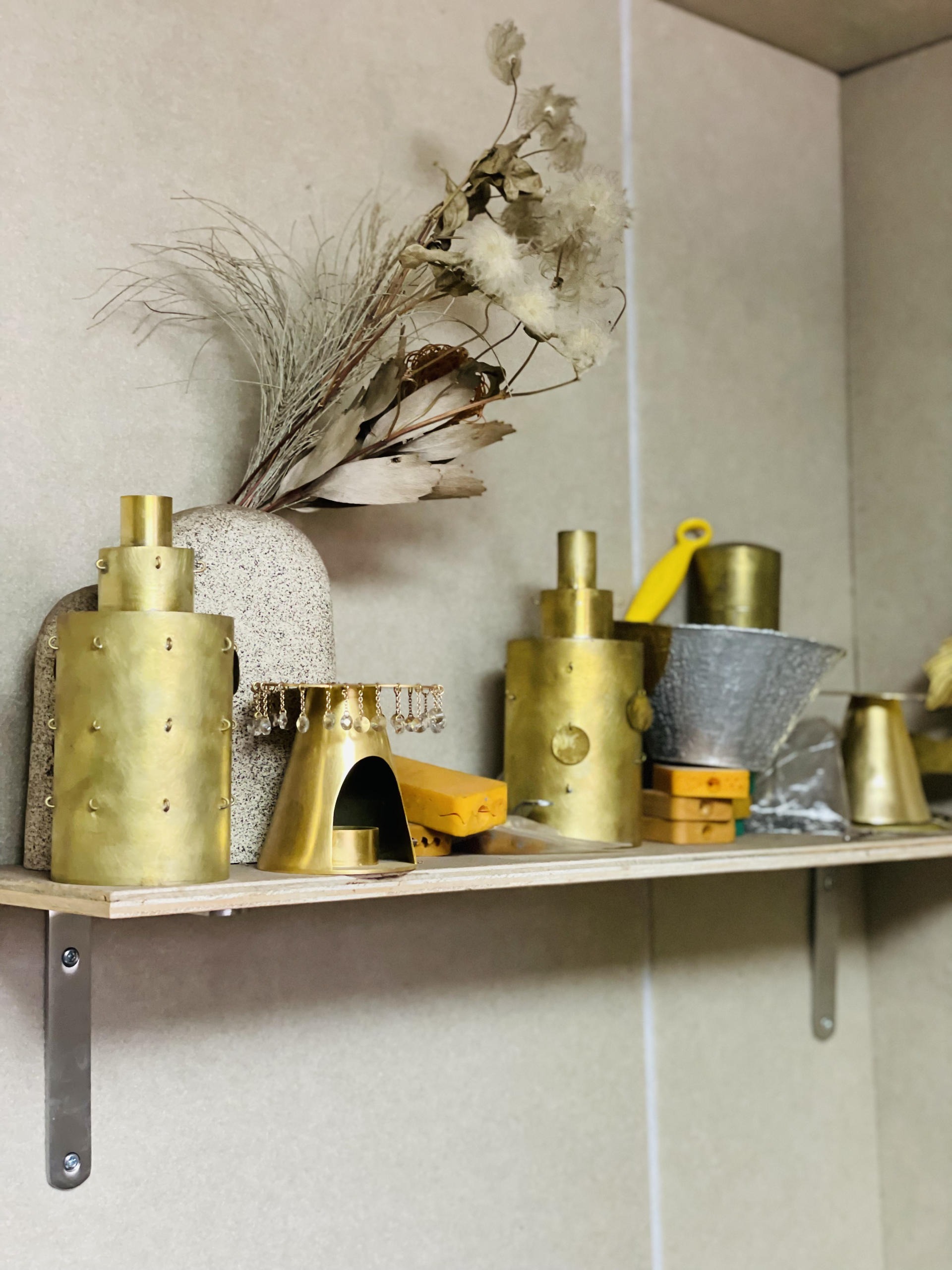
I really enjoy the whole process of developing an idea and making it in metal. It can be demanding because I have to handle every stage myself, but I think that’s also one of the greatest strengths of craft: the artist can be directly involved in the entire process.
What kind of work did you focus on in graduate school?
At first, I mostly worked with what I already knew and could do. But gradually, I started to see the limits of my skills. Since I hadn’t completed an undergraduate program in Korea, I often felt I was missing some of the training that other students had.
So I went out and actively looked for new metalworking techniques, trying to figure out which methods would let me make the things I envisioned. I visited people with expertise and asked for their advice.
As I did that, some workshop owners began suggesting approaches themselves: “Why don’t you try doing it this way?” I also received a lot of help from my professors and friends.
Would you say you’re still discovering your own style?
Yes, absolutely. I’m still searching. Fortunately, toward the end of last year, I found a subject that I wanted to explore more deeply and develop through my work.
I love historical Korean artifacts. As production has become increasingly industrialized, I feel we’ve lost some of the qualities our ancestors achieved when they made things by hand. That’s why I often find older objects more beautiful.
When I look at them, I’m struck by their design, but also by their functionality and the wisdom that went into making them. Rather than seeing these artifacts as things that belong to the past and will eventually disappear, I want to reinterpret them through my own perspective and that of others living today.
The more I think about how they might contribute to contemporary life, the more interested I become in them.
Of all the historical Korean artifacts, my favorite is the gold crown from Cheonmachong, a royal tomb dating to the Silla period. Its dangling gold ornaments move, and when I see them, I feel as though something in my heart moves with them. They’re that beautiful.
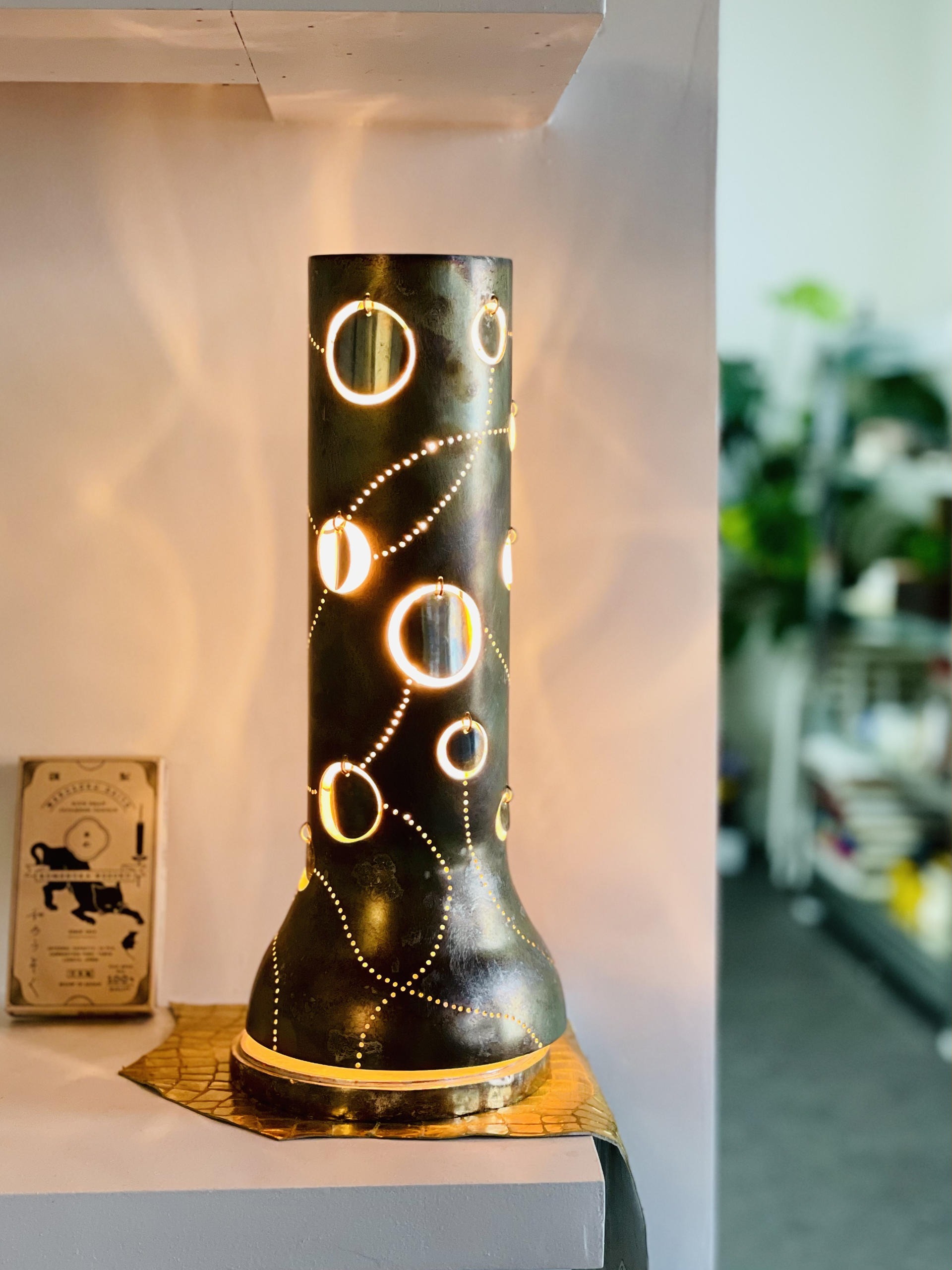
If you look closely at Korean artifacts, you’ll notice many ornaments that catch the light as they sway or tremble. There are tteoljam, ornamental hairpins with delicate, quivering decorations, for example. You can also see these qualities in jokduri, traditional ceremonial headpieces, and norigae, decorative pendants worn with traditional Korean clothing.
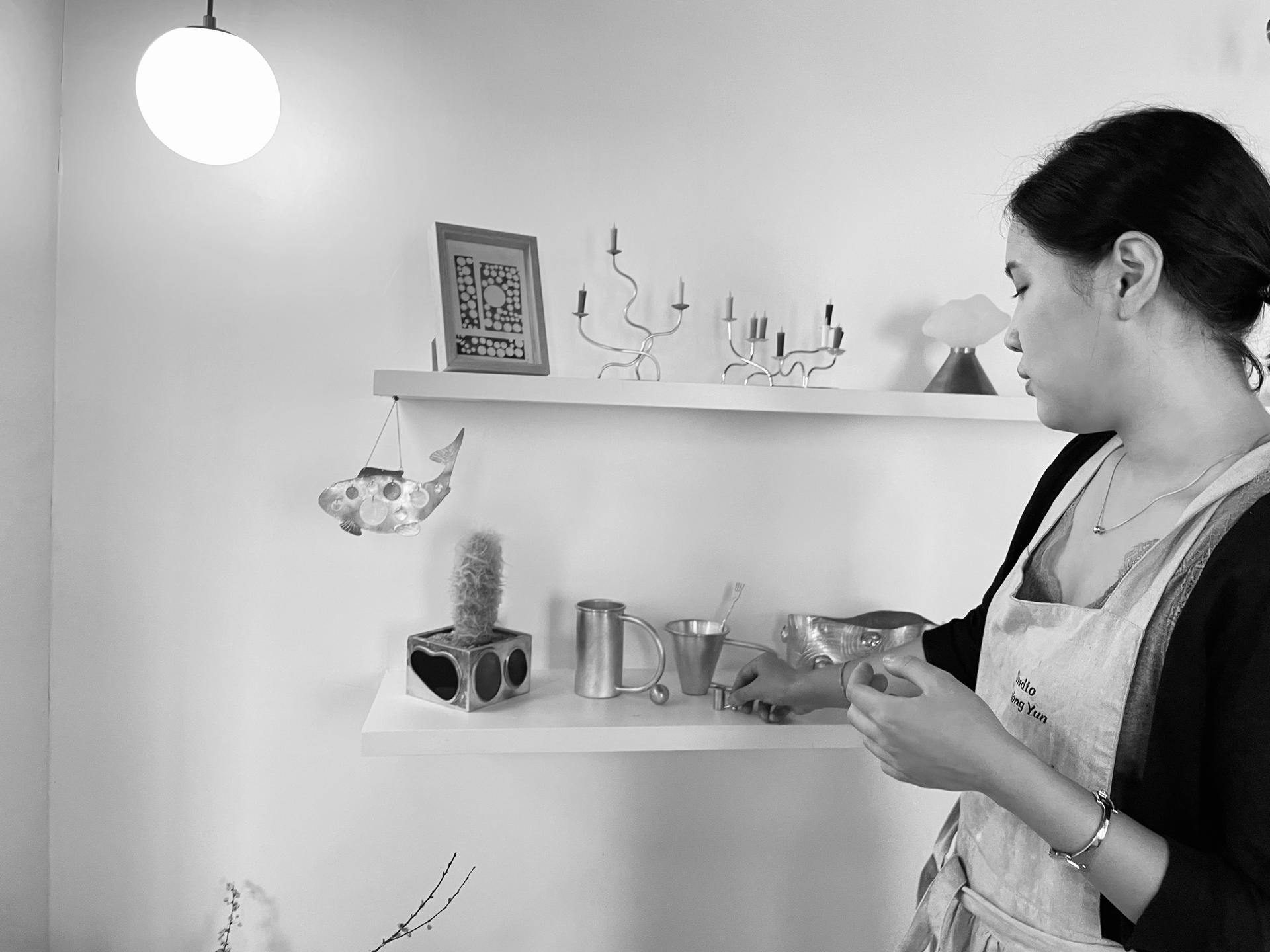
But I feel it’s a shame for that sculptural beauty to be limited to personal adornment. I thought those same qualities could be just as compelling in other metal objects.
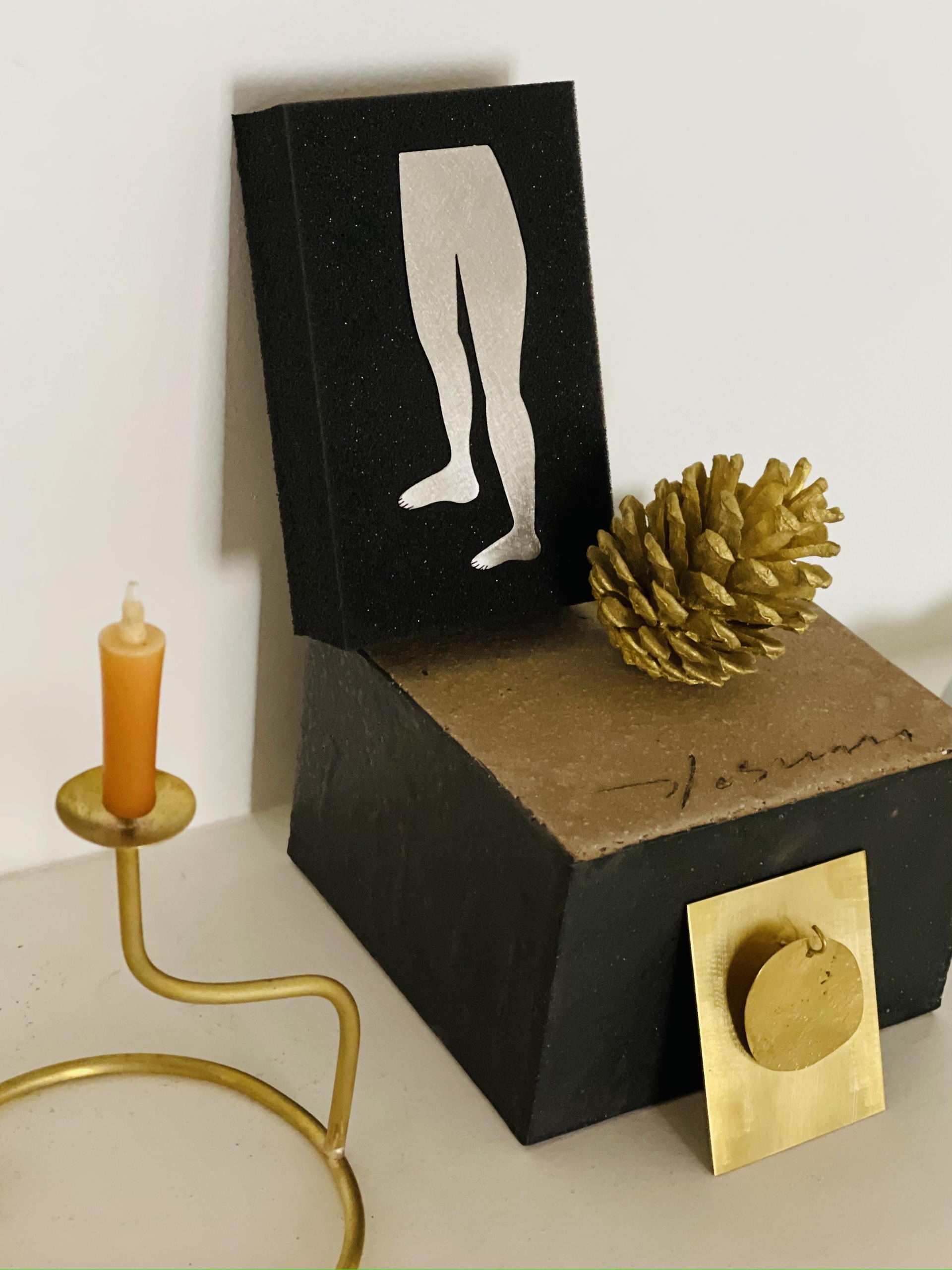
So I began experimenting with them in candlesticks and even forks. In the future, I want to make something that takes that swaying and trembling movement much further, whatever the object’s function might be.
Is metal craft the main focus of your practice?
I’m a metal craft artist and a designer, and I occasionally curate exhibitions, too.
You work across quite a few areas. What kinds of exhibitions have you curated?
Last year, I curated an exhibition in Euljiro as part of Craft Week, organized by the Korea Craft & Design Foundation.
I brought together a group of fellow master’s students, and we applied for exhibition support under the name “Oidong Collective.” The name came from the building number where we were studying.
Our proposal was selected through an open call, and we received funding from the Seoul Metropolitan Government to put on the exhibition.
The exhibition centered on plants. We planted them in a variety of vessels made by craft artists, matching each plant to its container. We also made planters from yugi, a traditional Korean copper alloy used to make tableware and other objects.
Related exhibition article
What three words would you use to describe yourself?
Travel, sleep, and pepper. I love food with pepper on it.
If you could do something completely different from what you do now, what would it be?
I’d like to be an actor. I’d love to try acting.
I like the idea of being allowed to become all these different people. You can explore different roles and express different sides of yourself. To me, it seems like a profession that gives you permission to do that freely, without anyone stepping in to tell you otherwise.


Could you introduce yourself?
Hello, I’m Yeodong Yoon, a metal craft artist.
Did you dream of becoming a craft artist when you were young?
I studied object design in France. Before that, I attended an international high school in Gugi-dong, Seoul. When my father took a year-long sabbatical, my family and I spent about a year in France.
I loved visiting the galleries and museums there. After that year in France—which was five years ago now—I returned to Korea and started thinking about my future. I wanted to share the kinds of cultural experiences I’d had with other people, and that led me to pursue art.
How did you begin working after returning to Korea?
At first, I wanted to make jewelry, so I thought I should learn more about metalworking. I reached out to Ahn Seung-tae, who had completed master craftsman training in Germany, and spent a year and a half learning in his studio.
That time was all about the fundamentals. I spent three months just learning how to saw metal. Once I began feeling more comfortable making jewelry, I applied to graduate school.
So you went back to school?
Yes. Choosing to go to graduate school was the most important decision of my life. It was also what led me to commit to working professionally with metal.
I really enjoy the whole process of developing an idea and making it in metal. It can be demanding because I have to handle every stage myself, but I think that’s also one of the greatest strengths of craft: the artist can be directly involved in the entire process.
What kind of work did you focus on in graduate school?
At first, I mostly worked with what I already knew and could do. But gradually, I started to see the limits of my skills. Since I hadn’t completed an undergraduate program in Korea, I often felt I was missing some of the training that other students had.
So I went out and actively looked for new metalworking techniques, trying to figure out which methods would let me make the things I envisioned. I visited people with expertise and asked for their advice.
As I did that, some workshop owners began suggesting approaches themselves: “Why don’t you try doing it this way?” I also received a lot of help from my professors and friends.
Would you say you’re still discovering your own style?
Yes, absolutely. I’m still searching. Fortunately, toward the end of last year, I found a subject that I wanted to explore more deeply and develop through my work.
I love historical Korean artifacts. As production has become increasingly industrialized, I feel we’ve lost some of the qualities our ancestors achieved when they made things by hand. That’s why I often find older objects more beautiful.
When I look at them, I’m struck by their design, but also by their functionality and the wisdom that went into making them. Rather than seeing these artifacts as things that belong to the past and will eventually disappear, I want to reinterpret them through my own perspective and that of others living today.
The more I think about how they might contribute to contemporary life, the more interested I become in them.
Of all the historical Korean artifacts, my favorite is the gold crown from Cheonmachong, a royal tomb dating to the Silla period. Its dangling gold ornaments move, and when I see them, I feel as though something in my heart moves with them. They’re that beautiful.
If you look closely at Korean artifacts, you’ll notice many ornaments that catch the light as they sway or tremble. There are tteoljam, ornamental hairpins with delicate, quivering decorations, for example. You can also see these qualities in jokduri, traditional ceremonial headpieces, and norigae, decorative pendants worn with traditional Korean clothing.
But I feel it’s a shame for that sculptural beauty to be limited to personal adornment. I thought those same qualities could be just as compelling in other metal objects.
So I began experimenting with them in candlesticks and even forks. In the future, I want to make something that takes that swaying and trembling movement much further, whatever the object’s function might be.
Is metal craft the main focus of your practice?
I’m a metal craft artist and a designer, and I occasionally curate exhibitions, too.
You work across quite a few areas. What kinds of exhibitions have you curated?
Last year, I curated an exhibition in Euljiro as part of Craft Week, organized by the Korea Craft & Design Foundation.
I brought together a group of fellow master’s students, and we applied for exhibition support under the name “Oidong Collective.” The name came from the building number where we were studying.
Our proposal was selected through an open call, and we received funding from the Seoul Metropolitan Government to put on the exhibition.
The exhibition centered on plants. We planted them in a variety of vessels made by craft artists, matching each plant to its container. We also made planters from yugi, a traditional Korean copper alloy used to make tableware and other objects.
Related exhibition article
What three words would you use to describe yourself?
Travel, sleep, and pepper. I love food with pepper on it.
If you could do something completely different from what you do now, what would it be?
I’d like to be an actor. I’d love to try acting.
I like the idea of being allowed to become all these different people. You can explore different roles and express different sides of yourself. To me, it seems like a profession that gives you permission to do that freely, without anyone stepping in to tell you otherwise.